Open six days a week 000-000-0000

Woodside, Queens

A translation somebody official has to accept, signed by the person who did it

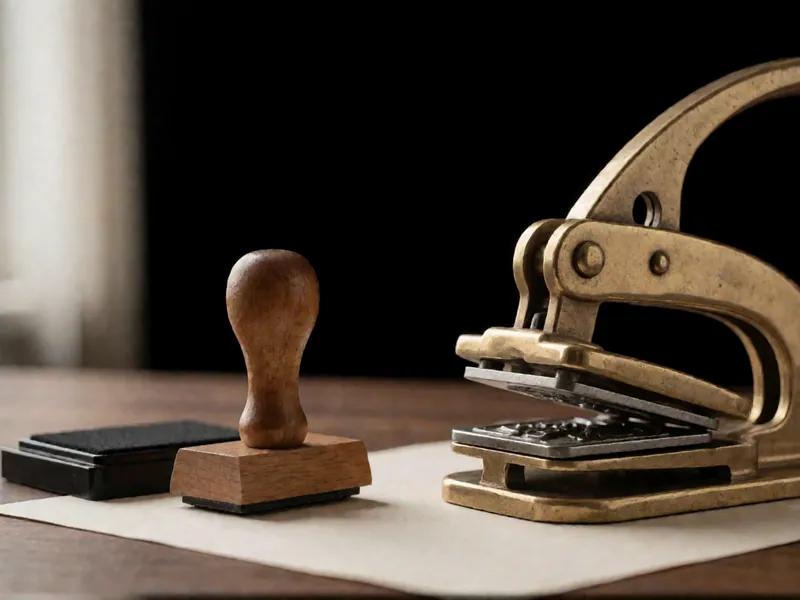
Certified work by the page, professional and technical files by the word, and interpreting in the room or down a line. The certificate attached to a translation is not a stamp — it is a named person saying they are answerable for it, which is the one part of this trade a machine has nothing to put in.

  • Every certified translation carries a certificate of accuracy signed by the translator who did the work
  • twenty-four languages on a standing panel, and six spoken at the counter without arranging anything
  • Three minutes on foot from the 61st Street - Woodside station, where the elevated line and the commuter railroad share one building
24
source languages on a standing panel, each with a page saying what goes wrong in it
16
kinds of document with a page of their own, from a birth record to a set of accounts
14
kinds of work, every one of them priced on the same rate card
10
things this office will not promise you, written out in full rather than left unsaid

Where to start

Three doors, and they are not the same job

A sheet of paper an official has to accept, a commercial file nobody official will ever read, and a person in a room. Pick whichever one is actually why you are here.

A record for an agency, a court, a university or a consulate.

A document somebody has to accept

A birth certificate for a filing, a transcript for an admissions office, a police record for a visa. What makes these different from every other kind of translation is that the reader is an official who did not choose you, and what they are checking first is not the prose but the certificate attached to it. That certificate is a signed statement by a named person, and it is the part a machine cannot produce.

Most single records are back with you in two working days.

What this involves

Contracts, filings, statements, manuals, a website.

A file for work

Nobody official is going to look at the certificate, so the question is a different one: does the translated text do the same job as the original did. A contract has to survive being argued about, a manual has to be followed by somebody holding a tool, and a landing page has to sell. We quote these by the word, we say which of them we would use machine translation on, and we charge less where we do.

Quoted by the word, most files inside a week.

What this involves

A meeting, a clinic, a deposition, a call.

Somebody in the room

Interpreting is spoken and it is live, which means it cannot be checked afterwards and the preparation is most of the job. We take the briefing, the names and the documents in advance, and we tell you honestly which settings we will not cover — a courtroom in this state appoints its own interpreters and we are not one of them.

On-site booked two working days ahead; remote often the same day.

What this involves

What this office is

A translation office under the elevated line on Roosevelt Avenue, three minutes from the 7 train, where a document you need somebody to accept is read by a person who signs their name to it.

Everything below is what that means in practice: the four kinds of work, what each of them costs, how a job actually runs, and the things this office will not promise you. Nothing on this site is priced on application.

More about the office

Spoken at the counter

  • English
  • Spanish
  • Portuguese
  • French
  • Polish
  • Romanian

These are the six languages somebody can be dealt with in at the desk without anything being arranged first. They are a different and much shorter list than the twenty-four languages the translation panel covers, and collapsing the two would be advertising a Finnish speaker behind the desk on a Tuesday morning.

Every language we cover

What we do

Four kinds of work, sorted by who is going to read the result

Not by language and not by document — by reader, because that is the only question that changes what the work has to be.

When somebody official has to accept it

A certificate of accuracy, signed by the person who did the work, attached to a translation that accounts for everything on the page. The three acts that sometimes go with it — a notarial signature, an apostille, a sworn translator abroad — are somebody else's acts and each has its own page saying whose.

When somebody official has to accept it

Apostille and legalisation

We prepare it and lodge it. A Secretary of State issues it.

A handling fee, plus the authority's own fee at cost.

Apostille

When the translation has to do a job

No certificate, no official reader, and a harder question instead: does the English text do what the original did. Priced by the word, quoted before we start, and delivered in the file format you sent.

When the translation has to do a job

Legal translation

Contracts, pleadings, evidence and corporate records.

By the word, at the legal rate.

Legal

When the translation has to do a job

Technical translation

Manuals, specifications, safety documentation and drawings.

By the word, at the technical rate.

Technical

When it is spoken

Live, once, and unreviewable afterwards, which is why the preparation is most of the work. We take the names, the documents and the subject in advance.

When it is spoken

Remote interpreting

Video or telephone, in half-hour blocks, often the same day.

By the half hour, one block minimum.

Remote

When a machine did the first draft

We offer this openly and price it at roughly half, because a company that will not name the cheaper thing it also sells is not making an argument.

Everything we do, on one page

What it costs

A page is 250 words, not a sheet of paper

It is the single most useful thing this site can explain to somebody standing at the counter holding a birth certificate, and it is why two documents that look the same size are quoted differently.

A certified page from $32 a page

Which of the three language groups yours falls into is the only thing that moves that figure, and the rate card prints the reason each group costs what it does rather than asking you to take it on trust. The certificate of accuracy is inside the page rate and is never billed on its own.

The smallest job $60 minimum

A single short record does not cost a fraction of a page. Small jobs meet the minimum instead, and it is on the rate card in the same table as the page rate rather than appearing for the first time on an invoice.

Where the figures come from. Every figure on this site comes from the rate card, and the estimator shows its arithmetic rather than only its answer. What it cannot know is how many words are actually on your document, which is why a quote follows a reading and an estimate does not.

The whole rate card

Before you ring

Work the figure out yourself first

The estimator asks what the document is, what language it is in, how long it is and who is going to read it, and then shows its arithmetic rather than only its answer — the page rate, the certification, the handling, the speed, each on its own line. Four worked examples are printed on the page before you answer anything.

Straight talk

Four of the ten things we will not promise you

Each card below quotes an advertisement you will genuinely see in this trade, and then says what is actually true. There are ten of them and every one has a page of its own.

What you will see advertised

“Your document will be handled by one of our certified translators.”

“Certified” describes the translation, not the translator

In the United States a certified translation is a translation with a signed certificate attached to it. There is no licence to hold, no register to be on and no examination anybody is required to have passed. The word describes the document.

Why

What you will see advertised

“Guaranteed acceptance. 100% accepted, or your money back.”

Nobody can guarantee that your document will be accepted

The body you send it to decides, every time, and it decides on grounds that include several things no translator controls. A guarantee of somebody else's decision is not a guarantee. It is a refund policy wearing one's clothes.

Why

What you will see advertised

“We will apostille your documents.”

We do not issue the apostille

An apostille is issued by a designated government authority — for a New York notarial act, the New York Secretary of State — and by nobody else. What a translation company does is prepare the document, lodge it and bring it back.

Why

What you will see advertised

“AI translation is not accepted and is too inaccurate for official documents.”

A machine cannot sign a certificate

That is not the case and this office will not argue it. Machine translation is often very good and we sell it, with human review, at about half the rate. The real limit is narrower and it is absolute: a certificate of accuracy is a statement by a person who can be named, questioned and held to it, and a model is not a person who can be any of those.

Why

All ten of them

How it works

What happens between sending it and getting it back

The commonest question after price is what happens next, and a customer who knows the sequence spots the step where their own case is going to be difficult.

  1. You send it, or bring it in

    A photograph or a scan is enough to quote and usually enough to work from. The whole sheet, flat, in daylight, including the reverse and every stamp. If it is a set, send the set.

  2. We read it and quote before starting

    Somebody reads the actual document rather than guessing from its name, counts it, and sends you a figure and a date. If there is a problem — the wrong version, a page missing, something unreadable — that is when you hear about it, not afterwards.

  3. It is translated, then read again

    By a person, in the pair, against the source. Every certified document is read a second time before the certificate is signed, and that second reading is included rather than sold as an extra.

  4. Certified, and notarised if it needs to be

    The certificate is signed by the translator who did the work. Where the receiving body needs a notarial signature or an apostille, that is arranged from here and tracked from here, and we tell you the realistic date rather than the hopeful one.

  5. It reaches you, and we keep a copy

    A PDF the day it is finished, and paper in the post where you asked for it. We keep the file so that a further copy later costs a copy rather than a job, and so the terminology matches if you come back with the next document in the same matter.

What a working day is. Working days, starting the working day after we have a legible copy of everything. Public holidays are not working days and neither is the Saturday morning the counter is open.

The whole sequence, in detail

Nobody is on the other end of this. This is a demonstration website. Woodside Translation is not a real translation company, nobody answers the telephone number on this site, no document sent here is read by anybody, and no estimate produced here is an offer. If you have a filing deadline or a document that has to be accepted by an agency, a court or a consulate, please instruct a real translation company.

Send us the document

A photograph is enough to quote from. Or work out the figure yourself first — the estimator shows its arithmetic rather than only its answer.